
Cross-border · Ruhr / Duisburg
Duisburg is continental Europe’s leading inland port and the natural Ruhr-area gateway for many deep-sea boxes that arrive in Antwerp. The road distance from the Antwerp terminals is typically about 170 to 190 kilometres, with a clear driving time often around two and a half to three and a half hours via the E34/A67 and the German A40/A3 cluster — exact time depends on the left or right bank of origin and on whether the delivery is at a DeCeTe-area terminal, a logport site, or a factory in the wider Ruhr. This is a structured Germany job: weight law, possible combined-transport conditions, and a language change at the gate all need to be correct before departure.
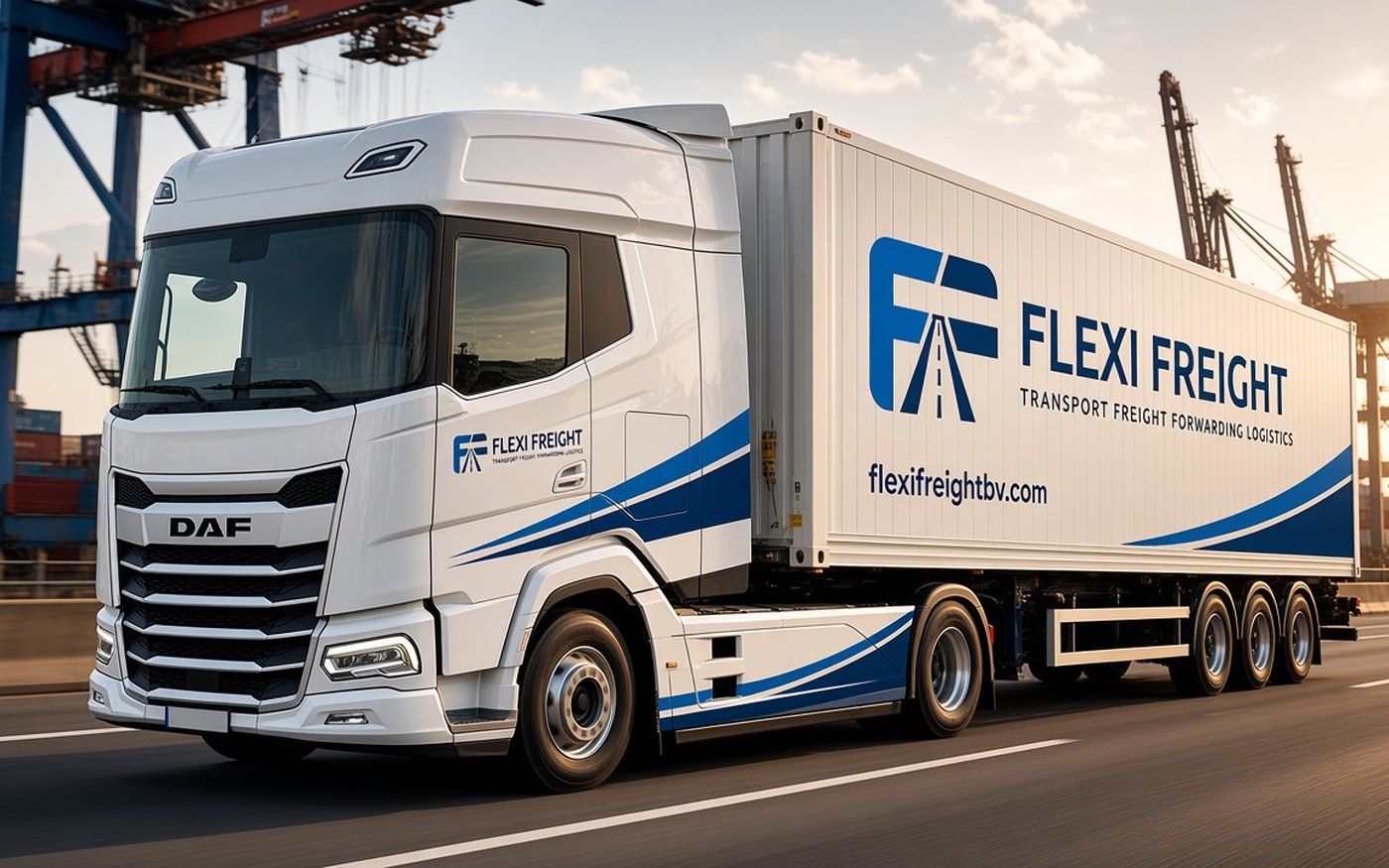
The city concentrates container terminals, trimodal yards and a dense ring of warehouses and plants in Duisburg, Oberhausen, Mülheim and neighbouring Ruhr towns. A truck sent to ‘Duisburg port’ without a terminal or street name will lose an hour. If the unit is in fact to be handed in at an inland terminal for a rail or barge onward move, that is a different product from a warehouse delivery — opening hours, PIN/release logic and cut-offs differ again.
Trimodality also means some cargo could have travelled the Rhine by barge. Confirm that your order is a road collection from Antwerp, not a pickup already in Duisburg.
Germany’s general maximum for a standard five- or six-axle articulated combination in ordinary road haulage is 40 tonnes. EU rules allow 44 tonnes in defined intermodal/combined-transport road legs under specified conditions (including, in the EU framework, limits on the road leg and the nature of the containerised move). Those conditions are legal tests, not a marketing slogan. If your move does not qualify, plan and load for 40 tonnes on the German section — and remember the combination must also be legal in Belgium at 44 tonnes typical maximum, which is usually the looser of the two for mass, not the tighter.
In practice, a heavy 20-foot box that is legal to pull in Belgium may be illegal once it crosses into Germany if the gross combination exceeds 40 tonnes and no combined-transport exception applies. This is the most common compliance surprise on the Antwerp–Ruhr corridor. Solve it at stuffing or at booking, not at the border.
Mass planning snapshot (verify against current law and the vehicle documents):
| Section | Typical planning mass | Comment |
|---|---|---|
| Belgium (start) | 44 t for a typical five-axle set | Axle loads still apply |
| Germany, ordinary road | 40 t general maximum | Default assumption unless an exception is documented |
| Germany, qualifying combined transport | Up to 44 t when legal conditions are met | Not automatic for every container trip |
| What to put on the order | VGM + vehicle combination type | Lets the haulier test the tightest section |
Union goods in free circulation do not require a customs stop at the German border. Goods still under control need a valid transit procedure started before Antwerp gate-out. Site language is German; put a gate reference and a reachable phone number on the order.
Empty returns often come back to an Antwerp depot, turning the file into a long round trip. An early Ruhr unload is required if you also need same-day empty in Belgium. Flexi Freight BV plans these runs from Beveren once the weight and document picture is clear: orders@flexifreightbv.com · +32 3 411 14 44.
The Ruhr’s industrial base means ADR and occasional out-of-gauge cargo appear on this corridor. ADR needs the full document pack, tunnel assessment and, in Flexi Freight’s published tariffs, a 15 % surcharge. Out-of-gauge is a permit job and should never be slipped into a standard import collection.
No. Germany’s general limit is 40 tonnes. 44 tonnes is reserved for movements that meet combined-transport (or other specific) legal conditions. If those conditions are not met, load to 40 tonnes for the German section.
Typically 2.5 to 3.5 hours in clear traffic for about 170 to 190 kilometres, excluding the Antwerp gate and site check-in. A same-day empty back to Antwerp needs an early delivery.
Barge is important on the Rhine, but many receivers still need a road delivery from the Antwerp deep-sea terminal. State the modality clearly on the order.
Send VGM, the exact German site and whether combined transport is intended. See Flexi Freight BV’s rates page for waiting time and surcharges.
See rates & conditions Request a quote
Slekkenstraat 4
9120 Beveren, Belgium
VAT: BE1025269016
Phone: +32 3 411 14 44
General & quotes: info@flexifreightbv.com
Orders: orders@flexifreightbv.com
Invoicing: invoice@flexifreightbv.com