
Sector · Construction materials
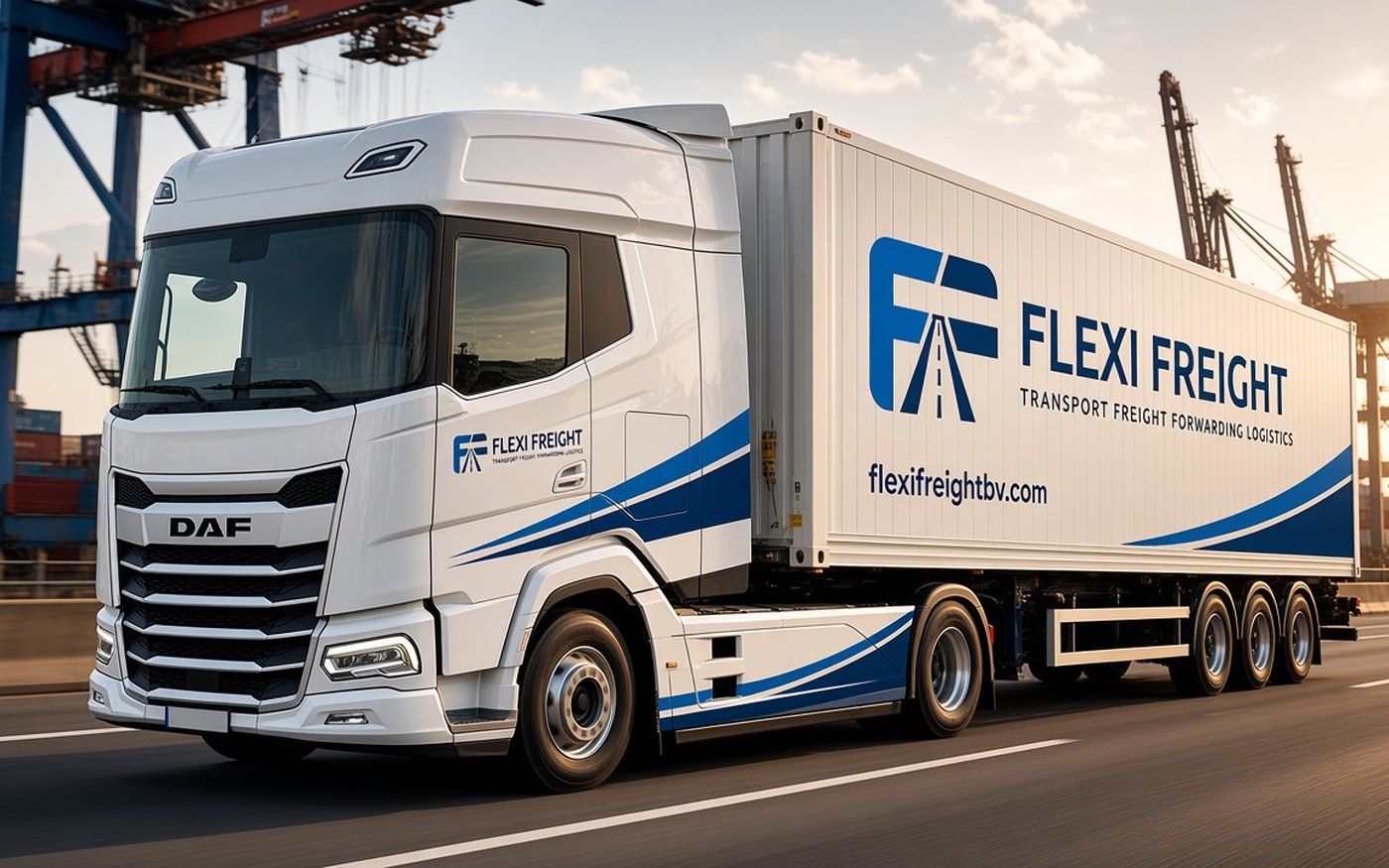
Sawn timber, engineered wood, plywood, boards and related forest products arrive in Antwerp and Zeebrugge in closed 40ft or 40ft High Cube containers, and sometimes in open-top or flat-rack units when the pack cannot be stuffed through a standard door. The road leg then goes to timber merchants, prefab plants, or construction-site depots in Belgium and neighbouring countries. Flexi Freight BV, at Slekkenstraat 4, 9120 Beveren, carries these as container road movements. This guide focuses on timber and wood-based construction products — not on heavy steel coils or oversize project cargo, which raise different mass and permit questions.
The usual operational risks are weight concentration, moisture, packaging rules, and a site that cannot take a High Cube or cannot unload a box without a proper dock or crane. None of those is solved by a shorter driving time.
A closed 40ft or High Cube is the default when packs fit through the doors and can be stuffed to a safe, legal load. High Cube helps when the product is bulky rather than extremely heavy. Open-top or flat-rack equipment is a different booking: lifting through the roof or over the side, possible lashing duties, and sometimes a different chassis. Do not convert a closed-box booking into an open-top at the terminal gate because “the packs are a bit high”. That is a new transport order.
Timber can be surprisingly heavy once packs are dense or still hold moisture. Use the VGM (SOLAS), and check axle loads for every country on the itinerary. A 20ft is sometimes the safer choice for a dense load; a 40ft High Cube that cubes out is a different file from a 20ft that is at the legal mass. Site height at the merchant’s shed matters: a High Cube that does not fit under a canopy has to be planned, not discovered on arrival.
Wood packaging (pallets, battens, dunnage) may be subject to ISPM-15 marking requirements depending on origin and destination. That is a cargo-compliance issue for the shipper and consignee; the road haulier still needs to know if a consignment is on hold for a documentary or phytosanitary check before gate-out in the Port of Antwerp-Bruges (release typically via Certified Pick-up).
Many timber yards unload with a forklift from the rear, which means live unloading and a longer dwell than a palletised retail drop. Some sites want the box dropped. Say which one applies. Opening a container in the rain on an unsheltered yard can damage the cargo; that is a site condition, not something the driver invents a procedure for on the spot. If the consignee requires a covered dock, write it on the order.
Union goods in free circulation move inside the EU without border customs formalities. Goods under customs control need a valid transit procedure before gate-out. The empty goes to the nominated depot; remaining bark, loose boards or plastic wrap can cause depot disputes, so agree whether the box must be swept after unloading. Waiting time follows Flexi Freight BV’s published tariff: one hour included at the quay then 65 euros per hour started; two hours included at the customer then 65 euros per hour started.
Send equipment type, VGM, site protocol and customs status to orders@flexifreightbv.com or call +32 3 411 14 44. Flexi Freight BV, Slekkenstraat 4, 9120 Beveren, Belgium, VAT BE1025269016, enterprise number 1025.269.016.
When the packs cannot be stuffed or destuffed safely through a standard container door, or when the agreed handling is a top lift. That must be booked as the correct equipment, not improvised at the yard.
ISPM-15 concerns wood packaging compliance for the cargo. The shipper and consignee are responsible for the documentary status. Tell the haulier if the box is still held for a check before it can leave the terminal.
Because packs are often taken out with a forklift, piece by piece, sometimes in the open air. Plan live-unload time against the published waiting-time conditions, not against a retail-style 30-minute drop.
Send the equipment type, the VGM and the yard protocol. Rates and waiting-time conditions are on Flexi Freight BV’s rates page.
See rates & conditions Request a quote
Slekkenstraat 4
9120 Beveren, Belgium
VAT: BE1025269016
Phone: +32 3 411 14 44
General & quotes: info@flexifreightbv.com
Orders: orders@flexifreightbv.com
Invoicing: invoice@flexifreightbv.com