
Belgium · Netherlands · Germany · France
A container that leaves an Antwerp terminal towards Venlo, Duisburg or Lille crosses an EU internal border, not an external customs frontier. That fact removes passport-style truck stops for Union goods in free circulation — and it tempts planners to assume that one set of road rules applies all the way. It does not. Mass ceilings differ, especially into Germany. Transit documents still apply when goods are not in free circulation. This article compares the four countries most often combined with an Antwerp collection, so the tightest rule is the one you stuff and book to.
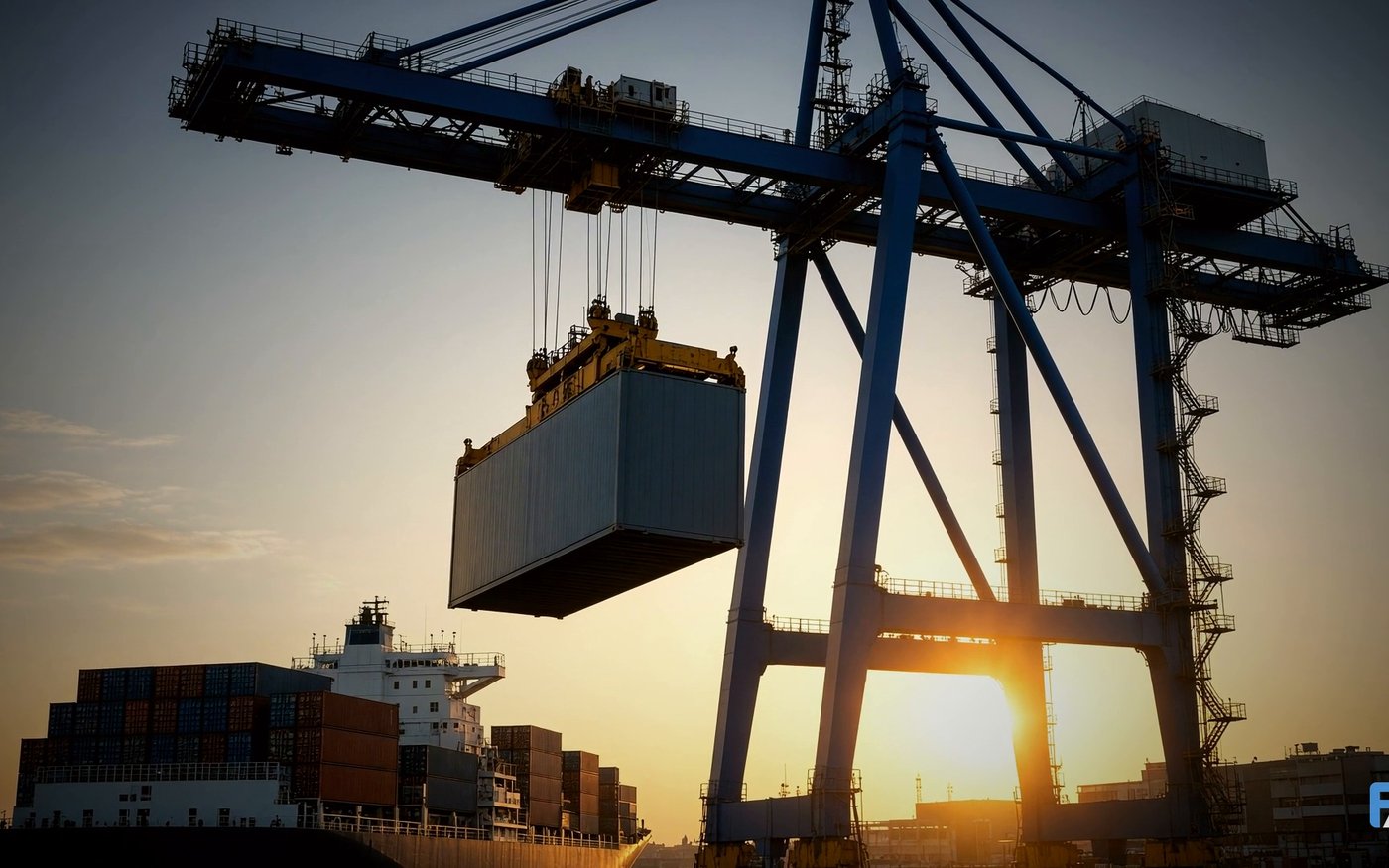
Belgium commonly allows 44 tonnes for a typical five-axle articulated combination, with axle-load limits and some regional footnotes (including conditioned higher masses in Flanders that you should never assume). France also commonly allows 44 tonnes for five-axle combinations. The Netherlands operates a higher general ceiling for many combinations (often planned up to 50 tonnes where the vehicle is authorised). Germany’s ordinary maximum is 40 tonnes, with 44 tonnes reserved for defined combined-transport (and other specific) cases.
Therefore a box stuffed to 43 tonnes gross combination is often illegal in Germany even though it was legal leaving Beveren, and a box stuffed to 48 tonnes for a Dutch idea of the law is already illegal on the Belgian kilometres to the border. Always test the origin country first, then the destination, then any transit country.
Planning comparison for a standard tractor and container chassis (verify current law and the vehicle registration):
| Country | Typical combination ceiling | What to watch |
|---|---|---|
| Belgium (origin) | 44 t for a typical five-axle set | Axles, 4.00 m height, regional footnotes |
| France | Often 44 t for five axles | Site protocols, tunnels for ADR, holiday calendars |
| Netherlands | Higher cap possible (often planned to 50 t if authorised) | Still must be legal in Belgium first |
| Germany | 40 t ordinary maximum | 44 t only if a legal exception truly applies |
| Union goods, free circulation | No routine customs stop | Commercial and road law still apply |
| Goods under customs control | Transit (e.g. T1 / NCTS) required | Must be valid at Antwerp gate-out |
For free-circulation Union goods, you still carry the commercial file, the CPu-based pickup right, VGM for export or planning, and any ADR pack. For non-Union goods moving inland or into another Member State under control, start and close the transit correctly. A missing transit at the Antwerp gate is a failed collection, not a problem ‘for later at the border’ — because there may be no border post to save you.
Driving and rest time, cabotage (if someone tries to add a second domestic load in the destination country), and ADR tunnel codes are separate legal layers. A Franco-Belgian round trip on the same day is usually still international carriage of the same unit, not cabotage, but a casual extra domestic drop requested after arrival can change the analysis. Agree the itinerary in advance.
Tell us every country on the route, the VGM, and whether the goods are in free circulation. We will not quote a German 40-tonne problem as if it were a Belgian 44-tonne local shuttle. orders@flexifreightbv.com · +32 3 411 14 44. Slekkenstraat 4, 9120 Beveren.
Stuff and offer to the tightest mass law on the way, complete the customs status before the Antwerp timeslot, and never treat an internal EU border as a place where paperwork can catch up. That single rule prevents most cross-border surprises we see on this network.
No, not if the combination would already be illegal on the Belgian section. Origin law applies from the first kilometre.
No. Combined transport has legal conditions. If they are not met, Germany’s ordinary 40-tonne cap applies.
No. It is needed when the goods are not in free circulation and must move under a transit procedure. Cleared Union goods do not require a T1 merely because a border is crossed.
Send VGM, countries and customs status with the booking. Flexi Freight BV’s rates and conditions are on the rates page.
See rates & conditions Request a quote
Slekkenstraat 4
9120 Beveren, Belgium
VAT: BE1025269016
Phone: +32 3 411 14 44
General & quotes: info@flexifreightbv.com
Orders: orders@flexifreightbv.com
Invoicing: invoice@flexifreightbv.com