
Home · Guides · One-way versus round-trip container haulage pricing in the Benelux
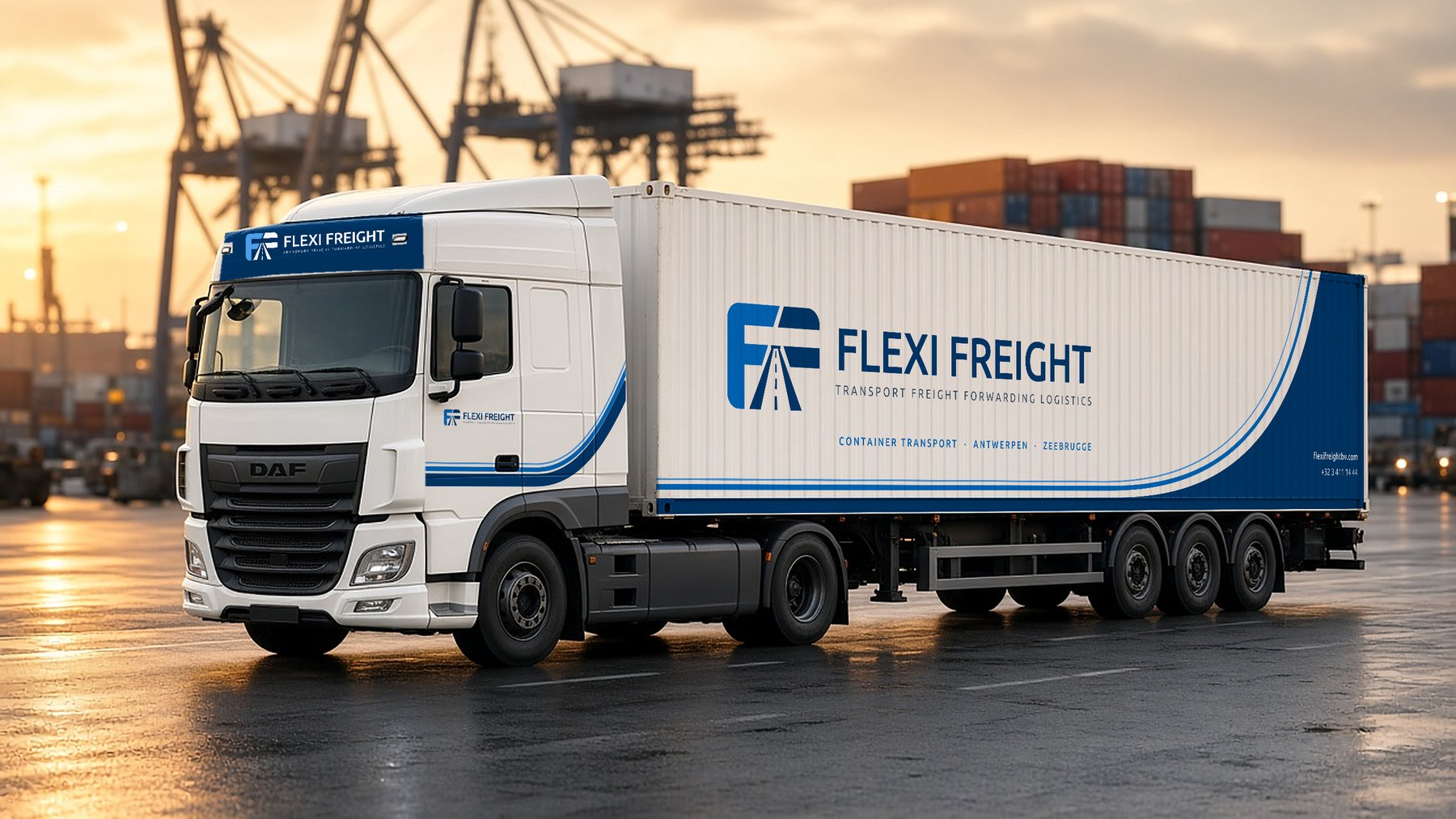
Two quotations for “the same” container can differ because one is a one-way loaded movement and the other is a round trip: loaded in one direction and a planned return — an empty to depot, an export pick-up, or a second loaded leg that keeps the chassis productive. In the Benelux, where many inland destinations sit only 30 to 250 kilometres from Antwerp, empty kilometres are a large share of the real cost. Pricing that ignores them is not a favour; it is a misunderstanding.
Flexi Freight BV publishes local shunt rates, waiting time and surcharges, but it does not publish a single door-to-door kilometre tariff for every Benelux address. Corridor prices are quoted. This article explains the logic you should expect to see, and the information that lets a haulier in Beveren offer a round-trip shape instead of two expensive one-ways.
If you only ever send a delivery address, you will usually be quoted as if the chassis must come home empty unless the haulier can find its own return. If you also send an export or a depot constraint, the mathematics can change.
A one-way import typically contains: positioning the combination to the terminal, the loaded run to the consignee, and then some way of recovering the chassis — often with the empty container to a nominated depot, which may not lie on the straight line home.
Shippers sometimes think of the empty return as optional. For the shipping line it is not: detention runs until the empty is in-gated at the right depot.
Waiting time, timeslots, ADR, genset and diesel surcharges still sit on top, as published. A one-way that spends three hours at a dock is not cheap merely because the loaded distance was 40 kilometres.
A useful round trip might be: import delivery in, for example, Ghent, Limburg or North Brabant, then collection of a ready export box to an Antwerp terminal; or a loaded export from a Belgian shipper after an empty was dropped and stuffed; or two loaded legs if weights, equipment types and time windows actually match.
The windows must be compatible. An export cut-off at 14:00 and an import dock that only opens at 13:30 is not a round trip, it is a missed vessel. The same is true if CPu on the import is late, or if VGM and the seal on the export are not ready when the truck arrives.
Cross-border Benelux legs (for example Antwerp–southern Netherlands or Antwerp–Luxembourg) can still be paired, but you then stack two countries’ toll logics and, sometimes, two empty-depot regimes.
State, for each box: terminal, type, weight, addresses, windows, and the official empty depot. Then say clearly whether you want (a) import plus empty return, (b) import plus a named export, or (c) a one-way with the empty left for a later, separate order.
Extra stops that create a mini-round (document stop, weighbridge, second unload) must be priced as such. Flexi Freight BV publishes € 60 and € 100 extra-stop charges in the 0–15 km and 15–30 km bands.
Cancellation of one leg of a planned combo can unravel the other. If the import is not released, say so early enough to protect the export cut-off and to stay outside the 48- and 24-hour cancellation bands where possible.
| Shape | Typical contents | What you must declare |
|---|---|---|
| One-way loaded + later empty | Two mobilisations, higher empty risk | That the empty is a separate later order |
| Loaded delivery + empty return same cycle | One chassis day if time allows | Depot location and expected unload duration |
| Import + export combo | Best equipment productivity when windows fit | Both container types, weights, cut-offs and CPu/VGM readiness |
| Two loaded legs, mixed equipment | Often not feasible on one chassis | Exact types; do not assume a 20' and a 40' can swap mid-day without a plan |
There is no single public door-to-door rate for all Benelux postcodes. Ask for a quotation that states which shape is being priced.
The official depot is often not on the way home, may be on the other river bank, and always involves a second gate process. It is real work and real time, and it stops the detention clock — which is why it should be planned and priced, not assumed.
Sometimes a return opportunity exists, but it cannot be promised in a quote unless it is already identified. If you need a firm price, ask for the import-plus-empty-return shape, and mention if you may later have an export to add.
No. The published shunt rates (€ 120 / € 140) are for local port shunts. A Ghent, Tilburg or Luxembourg leg is a hinterland quotation.
Send both legs, if you have them, to Flexi Freight BV in Beveren in a single request. Use the rates page for waiting time, extra stops and published surcharges that may sit on either shape.
View rates & conditions Request a quote
Slekkenstraat 4
9120 Beveren, Belgium
VAT: BE1025269016
Phone: +32 3 411 14 44
General & quotes: info@flexifreightbv.com
Orders: orders@flexifreightbv.com
Invoicing: invoice@flexifreightbv.com